Türkiye · Istanbul · Weekend Guide
How to Spend the Perfect
48 Hours in Istanbul
Two days is enough to fall in love with this city. It is not enough to understand it. Here's how to make the most of both.
"Istanbul is the only city in the world that stands on two continents. In 48 hours, you won't see all of it. But you will understand, viscerally, why everyone who's been there talks about it the way they do."
There's a specific kind of disorientation that hits you when you arrive in Istanbul for the first time. It isn't the jet lag or the airport crowds. It's the scale of history compressed into a city that is also, simultaneously, entirely and aggressively alive. Everywhere you look, something is being sold, prayed over, argued about, or eaten. Minarets rise out of neighborhoods where the coffee shops have WiFi passwords written in chalk. A Roman cistern sits underground beneath a block of restaurants where waiters argue about football. The city doesn't feel ancient so much as it feels layered — like every era decided to stay.
Two days is not enough time to untangle any of this. It is, however, exactly enough time to fall in love with it. This itinerary is built around that goal: not a checklist of monuments to photograph, but a sequence of experiences that lets Istanbul actually land on you.
The instinct on the first morning is to rush. Don't. Istanbul rewards the traveler who arrives without urgency better than almost any city in the world. Start the day before the tour groups do — which means before 8am — and you'll have access to some of the most astonishing architecture on earth with almost no one else in it.
Walk into the square while the morning call to prayer is still echoing off the stone. The Blue Mosque and Hagia Sophia face each other across a garden that, at this hour, has maybe a dozen people in it. Sit on a bench. Let the scale of the place register before you start moving through it.
Converted back into a functioning mosque in 2020, Hagia Sophia is now free to enter but requires modest dress and removes shoes at the entrance. Go early. The building was completed in 537 AD and has been, in sequence, a Byzantine cathedral, an Ottoman mosque, a secular museum, and a mosque again. The mosaics that survived Ottoman whitewashing are extraordinary. The sheer volume of the interior dome — 56 meters high — produces a particular silence that nothing else quite replicates.
Turkish breakfast is one of the great meals of the world and deserves more than a hotel buffet. Find a small kahvaltı (breakfast) restaurant in the Sultanahmet backstreets and order the full spread: white cheese, olives, tomatoes, cucumbers, eggs two ways, honey, clotted cream, simit, and çay in those tulip glasses that never quite cool down. Budget an hour. This is not a meal to rush.
Named for the 20,000 Iznik tiles inside that shift from blue to green depending on how the light falls, the Blue Mosque is the most visually complete Ottoman imperial mosque in the city. Non-Muslim visitors are welcome outside of prayer times. The interior is quieter than Hagia Sophia and somehow more intimate despite the comparable scale. Stand in the center and look up at the cascade of domes. It takes a moment for the geometry to resolve itself.
The Grand Bazaar has 4,000 shops, 60 covered streets, and more than 30,000 people passing through it on a busy day. Most tourists enter from the main Beyazıt Gate and immediately get absorbed into the section selling tourist goods: carpets, evil eye beads, pashminas. Enter instead from one of the smaller gates on the eastern side and you'll find the sections where goldsmiths, leather workers, and textile merchants have been operating out of the same stalls for generations. The haggling culture is real but gentle — a declined offer is never taken personally, and a glass of tea offered during negotiation usually means the seller likes you.
Don't miss: The hans — old caravanserai courtyards hidden inside the Bazaar that most visitors walk past. They're quieter than the main corridors and give you a sense of what the building felt like when it was a trading hub for the entire Ottoman Empire rather than a destination in itself.
Walk ten minutes from the Bazaar back toward Sultanahmet and descend into the Basilica Cistern — a 6th-century underground water reservoir supported by 336 marble columns, some of which rest on recycled Roman bases including two Medusa heads whose origins nobody has fully explained. The cistern is cool, lit in amber, and produces the particular sensation of being inside something that has survived more history than you can easily compute. It's one of the few places in Istanbul where the crowds actually add to the atmosphere rather than diminishing it. Pre-booking the timed entry through a ticketing platform is worth doing — walk-up queues in high season can be long.
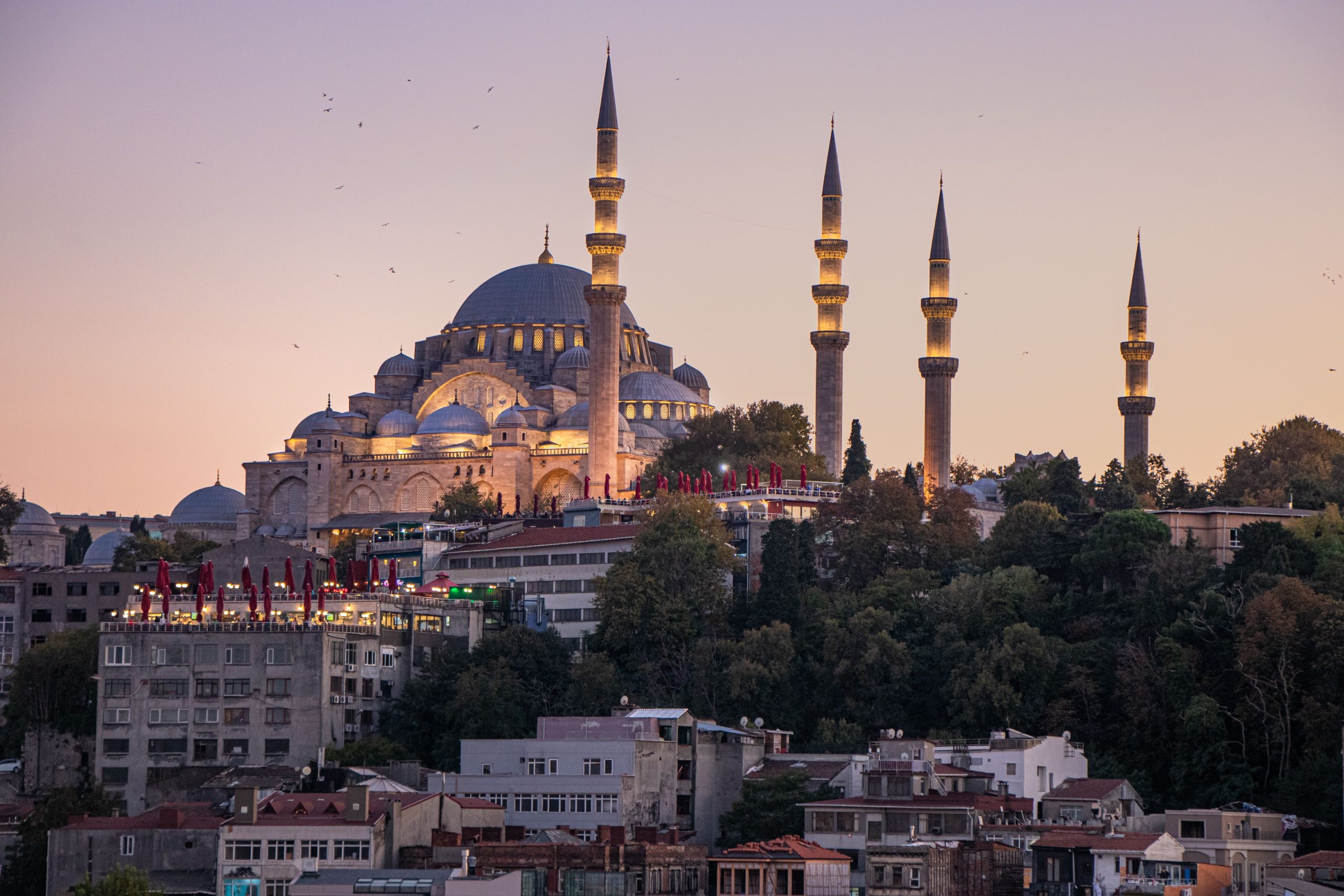
Cross the Galata Bridge — pausing to watch the fishermen who line both sides of it at all hours — and climb to the Galata Tower observation deck for the single best view of Istanbul's skyline at golden hour. The silhouette of minarets against a sunset over the Bosphorus is the image that ends up as the screensaver. Arrive 40 minutes before sunset for the best light. Book the entry in advance online since the tower has capacity limits that fill up on summer evenings.
The Karaköy neighborhood, at the base of the Galata Tower, has transformed in the last decade into Istanbul's most interesting dining district without fully losing the old port-town energy that made it worth visiting in the first place. Meyhanes — traditional Turkish taverns — serve meze and raki in a format that rewards slow eating and long conversations. Order a selection of cold meze to start, follow with grilled fish or slow-cooked meat, and let the raki extend the evening into something that feels like a proper Istanbul night.
The second day is for the Istanbul that doesn't appear on the brochure. The waterway that splits the city between Europe and Asia. The neighborhoods where people actually live. The food that isn't being sold to tourists. If day one is about understanding why Istanbul matters historically, day two is about understanding why people who live there love it.
The Egyptian Bazaar — known locally as the Spice Bazaar — is smaller, older, and in many ways more sensory than the Grand Bazaar. The air inside carries cumin, dried rose petals, saffron, and something like pepper that takes a minute to identify. The stalls sell teas, spices, Turkish delight, and dried fruits with an intensity that makes you want to buy things you have no practical use for. Go in the morning, before the cruise ship crowds arrive, and you'll find the vendors in a mood to talk.
This is the experience that reframes everything you've seen so far. The Bosphorus strait — 31 kilometers of water connecting the Black Sea to the Marmara — is lined on both sides with Ottoman palaces, wooden yalı mansions, military fortresses, and fishing villages that look unchanged from photographs taken a hundred years ago. A public ferry does a slow loop up the European and Asian shores and back. A guided cruise, if you want commentary and a smaller boat, covers the highlights with more context. Either way, being on the water looking back at Istanbul is different from being in it. Booking a Bosphorus cruise with a guided tour in advance gets you skip-line boarding and often a better route than the public ferry, which can be packed in summer.
From the water you'll see: Dolmabahçe Palace (the last imperial Ottoman residence, built to look European), the two Bosphorus suspension bridges, the fortress of Rumeli Hisarı built by Mehmed II in 1452 in preparation for the conquest of Constantinople, and the Asian shore's wooden mansions that represent what the city looked like before concrete.
Take a ferry from Eminönü to Kadıköy on the Asian shore. The crossing takes 20 minutes and costs almost nothing. Kadıköy is where Istanbul goes to eat when it's feeding itself rather than its tourists: a covered market full of cheese sellers, butchers, fishmongers, and baklava shops where the trays come out of the oven at noon. Walk through the market and eat as you go — a slice of something, a cup of ayran, whatever the crowd is pointing at. Then find a table at one of the meyhanes on the edge of the market for a proper sit-down lunch.
Ferry back to the European side and walk north along the Golden Horn waterway to Balat, a hillside neighborhood of crumbling Ottoman townhouses painted in faded reds, yellows, and blues. It was historically home to Istanbul's Jewish and Greek communities and retains an architecture that predates most of the city's 20th-century development. There are antique shops, one or two excellent coffee places, and a visual density that rewards slow walking and looking upward.
Istanbul's main pedestrian boulevard runs for about 1.4 kilometers from Taksim Square to the top of the hill above Karaköy, lined with 19th-century European-style apartment buildings that now house bookshops, music stores, clothing brands, restaurants, and the city's most active street life. The famous nostalgic tram runs its length. Duck off into the pasaj — covered arcades — for the quieter, older version of the same energy. Çiçek Pasajı and the Balık Pazarı fish market behind it are worth a long detour.
Istanbul has rooftop restaurants the way other cities have bus stops. For a final dinner, find one with a view of the old city skyline — there are several around Beyoğlu with direct sightlines to Hagia Sophia and the Blue Mosque. Order something slow. The city at night from above, with its minarets lit and the ferries moving across the dark water below, is the image you'll be describing to people for the next year.
What Most 48-Hour Guides Leave Out
The things that make Istanbul worth talking about long after you've left aren't on any monument list. They're the texture of the city: the sound of the call to prayer layering over the noise of a busy street. The particular quality of Turkish hospitality that makes a shop owner offer you tea before you've expressed any intention of buying anything. The way the Bosphorus light changes at midday. The seagulls that move with the ferries between continents as if it were perfectly ordinary, which here it is.
Two days forces a kind of editing that's actually useful. You can't do everything, so you do the things you chose deliberately, and they land differently than they would if you'd tried to see the whole city at once. Istanbul rewards the traveler who accepts the constraint and works within it. The city that 48 hours shows you is already extraordinary. The rest of it will be waiting the next time you book a flight.
Skip-line entry to the Basilica Cistern saves 30–60 minutes in peak season. Bosphorus guided cruises with confirmed departure times book out days in advance in summer. Evening food tours of Kadıköy or Beyoğlu are worth considering if you want a local guide rather than wandering alone. All of these can be browsed and booked in one place before your flight lands, which means your first morning in Istanbul starts with a walk to a café rather than a hunt for tickets.
Istanbul is served by two airports: the massive Istanbul Airport (IST) on the European side, which handles most international long-haul traffic, and Sabiha Gökçen (SAW) on the Asian side, which handles many low-cost carriers from Europe. Which one to fly into depends on where you're coming from and where you plan to stay. Either way, comparing prices across carriers before committing is always worth doing — routes to Istanbul are competitive and prices vary significantly by day and booking window. Running a search across multiple airlines simultaneously is the most reliable way to find the best available fare rather than the one that happens to appear first.
Istanbul Is Waiting
The flights are bookable. The experiences are reservable. The rest is just deciding to go.
This guide contains affiliate links. Booking through the links above may earn a small commission at no extra cost to you. All recommendations reflect genuine editorial judgment about what makes a 48-hour Istanbul trip worth remembering.
Recommended Reads:
No related posts.