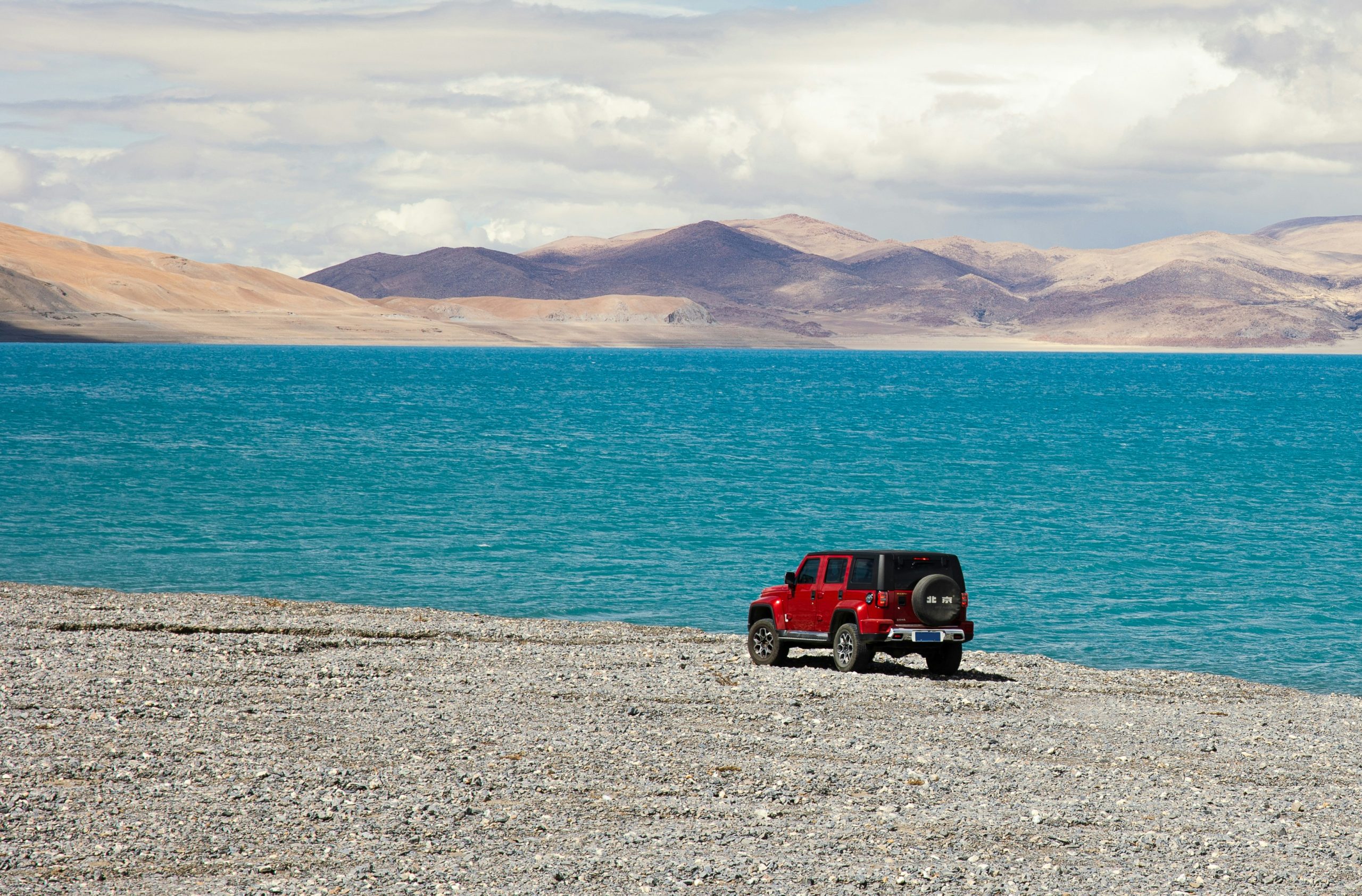
I Found 5 Magical Places Most Travelers Never See
No filters, no crowds, no geotags. These are five places that still feel like a secret — and exactly how to reach each one before that changes.
Every well-traveled friend I have keeps a quiet mental list — the handful of places they tell almost no one about, because the second a spot gets tagged enough times, it stops being a discovery and starts being a queue. I've spent the last few years chasing five of those places myself, and what struck me wasn't just how beautiful they were. It was how little I'd heard about any of them before I went.
None of these are secret in the conspiratorial sense — they're on maps, they have names, people live near them. They're just far enough off the standard route that most travelers never bother, or never even hear about them in the first place. That's the whole appeal. Here are the five, in the order I'd actually recommend chasing them.
"The best places don't hide. They just wait for someone curious enough to keep driving past the last paved road." — Guide, Salar de Uyuni
01The Mirror of the Sky — Salar de Uyuni, Bolivia
At 12,000 feet above sea level, the world's largest salt flat turns into something that doesn't look real for a few weeks each year. After the rainy season, a thin sheet of water spreads across the salt crust and turns the entire landscape into a perfect mirror — sky above, sky below, and a horizon line that simply disappears. Visitors describe it as walking on clouds, which sounds like an exaggeration until you're standing in the middle of 4,000 square miles of flat white salt with nothing to break the reflection.
Most people fly into La Paz, then connect to Uyuni by a short domestic flight or an overnight bus, and book a multi-day tour from there that also covers nearby colored lagoons and geyser fields. The flat itself is genuinely remote — there's no casual detour here, which is exactly why so few travelers make the trip. Daily costs run lean by international standards, which makes it one of the more accessible entries on this list once you've covered the flight in.
Salar de Uyuni at a glance.
- Best time to go
- Dec – April for the mirror effect
- Nearest gateway city
- La Paz, Bolivia
- Daily budget
- $40 – $90 per person
- Suggested stay
- 2–3 day guided tour
02The Mountain That Glows Blue — Kawah Ijen, Indonesia
This one requires real commitment, and that's precisely why so few travelers ever see it. Kawah Ijen is an active volcano on the Indonesian island of Java, and at its summit sits a crater lake surrounded by sulfur vents that, after dark, burn with an electric-blue flame visible only at night. To witness it, you hike up in pitch darkness, usually starting around 1 a.m., wearing a gas mask for the final stretch because the sulfur fumes are genuinely strong enough to require one.
It sounds intense because it is — but the payoff is a sight almost nobody outside serious volcano-trekking circles has ever heard of: flames that look less like fire and more like something from another planet, flickering against black volcanic rock in total darkness. By sunrise, the blue fire fades and the crater reveals a turquoise sulfur lake instead, which means you essentially get two completely different landscapes in a single hike.
03The Caves Carved From Marble — Capillas de Mármol, Chile
Tucked into General Carrera Lake in Chilean Patagonia, the Marble Caves are a set of cathedral-like caverns formed over 6,000 years as glacial water slowly wore through solid marble. The lake's mineral-rich water shifts in color depending on the season — soft turquoise in some months, deep cobalt in others — and the marble walls reflect that color back in swirling patterns that look hand-painted.
You reach the caves by small boat or kayak from the tiny town of Puerto Río Tranquilo, which itself takes some effort to get to — usually a long drive down Chile's famously remote Carretera Austral, a highway that winds through some of the least-visited terrain in South America. The caves only stay calm enough to enter on certain days, so it's worth building flexibility into your schedule rather than locking in a single date.
04The Rainbow Mountains — Zhangye Danxia, China
Most people assume photos of these mountains are heavily edited. They're not. Zhangye Danxia, in China's Gansu province, is a landform shaped by 24 million years of mineral deposits and sandstone erosion, resulting in ridgelines striped in red, orange, yellow, and green — sometimes all in the same rock face. Wooden boardwalks wind through the park so visitors can walk right alongside the formations without damaging them.
It's a far easier trip logistically than the others on this list — a domestic flight to Zhangye followed by a short taxi or shuttle ride gets you there — but it remains largely unknown outside China and a small circle of serious landscape photographers elsewhere. Visit in the late afternoon, when low sunlight makes the color bands far more vivid than they appear at midday.
Start Planning Your Own Route
A few resources that make chasing places like these much less stressful.
Some links above are affiliate links. If you book through them, we may earn a small commission at no extra cost to you.
Multi-leg trips like these — three flights, two layovers, one overnight bus — tend to fall apart at the logistics stage, not the destination stage. Before locking in dates for any remote route, it's worth comparing fares across a few weeks rather than booking the first option you see, since prices to less-common airports can swing more than people expect; Compare Airfares Worldwide before committing to a route. And because several of these destinations involve unusual baggage rules — gas masks and hiking gear for Kawah Ijen, layers for high-altitude Bolivia — I'd also recommend checking AirlinesOffices.com ahead of time for specific airline baggage policies and airport contact details, especially on the connecting legs where rules tend to differ from the main international flight.
05The Edge of the World — Faroe Islands
Somewhere between Iceland and Norway, scattered across the North Atlantic, sit eighteen islands that feel less like a destination and more like a mood. Cliffs drop straight into the sea, grass-roofed villages cling to fjords, and waterfalls pour directly off mountainsides into the ocean below — Múlafossur, near the village of Gásadalur, is the one most worth the drive. Weather here changes by the hour, which sounds inconvenient until you realize it means the same view can look like four different paintings in a single afternoon.
What keeps the Faroe Islands off most travelers' radar isn't difficulty — flights connect through Copenhagen or Reykjavík fairly easily — it's simply that almost nobody thinks to look here in the first place. Iceland gets the attention; the Faroes get the silence. Renting a car is the only practical way to see the islands properly, since public transport is sparse and the best viewpoints are rarely near a bus stop.
The Pattern Behind All Five
Looking back at this list, the thing these five places have in common isn't remoteness for its own sake — it's that each one requires one extra step most travelers skip: an extra flight connection, an overnight bus, a 1 a.m. wake-up call, a willingness to wait for the right weather window. That single extra step is usually the entire reason a place stays uncrowded. It's not a secret code. It's just a slightly longer way of getting somewhere worth the detour.
If you're the kind of traveler who'd rather plan around a place like this than just pick whatever shows up first in search results, it's worth saving these somewhere you'll actually look again. I keep a running board of spots exactly like these five — plus practical planning notes and airline updates — on Pinterest, and it's the first place I go back to when I'm deciding where to point a future trip.
Whichever one you go after first, give yourself more time than you think you need to actually get there, and don't rush the last leg. The places that take effort to reach are usually the ones that stay with you the longest — and so far, that's held true for every single one on this list.